
Monthly Herbal Monograph - Chamomile
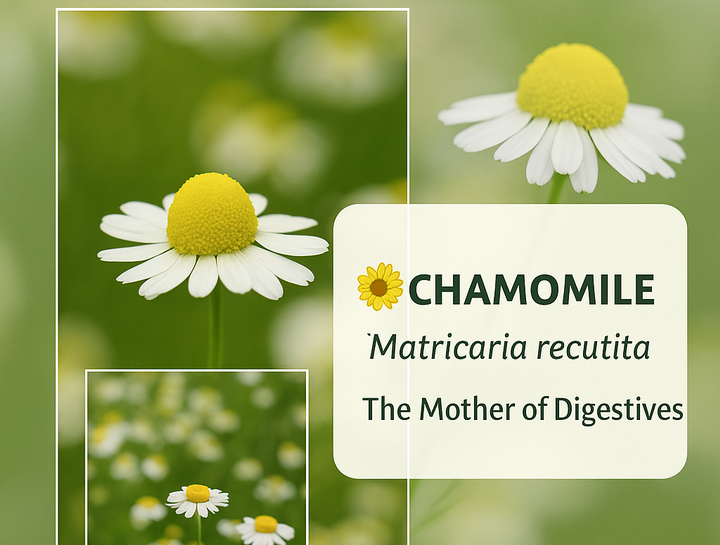
Chamomile (Matricaria recutita)
Also known as: German Chamomile, Wild Chamomile
Family: Asteraceae
Parts used: Dried flowering heads
Where it grows: Native to Europe and Western Asia; now cultivated worldwide. Thrives in full sun and well-drained soils, and readily self-seeds — an easy addition to any healing garden.
Fun Fact:
Chamomile flowers yield a vivid blue essential oil when steam-distilled — the color comes from chamazulene, a compound formed during the distillation process.
Traditional and Modern Uses:
Chamomile has been cherished for centuries as a gentle, multi-purpose remedy for digestive upset, tension, and inflammation. Traditional herbalists valued it for easing restlessness and promoting calm, particularly in children and animals. In modern veterinary practice, it’s often used as a mild sedative, anxiolytic, carminative, and topical anti-inflammatory for pruritic or irritated skin. It also supports digestion by relaxing smooth muscle and stimulating bile flow.
How It Works:
Chamomile’s therapeutic actions arise from its unique combination of volatile oils (including α-bisabolol and chamazulene), flavonoids such as apigenin, and other sesquiterpenes. These compounds work synergistically to reduce inflammation, calm the nervous system, and promote gastrointestinal comfort. The essential oil contributes antispasmodic and anti-inflammatory effects, while apigenin interacts with GABA receptors to promote relaxation and sleep.
Safety & Precautions:
Chamomile is generally very safe when used appropriately. As a member of the Asteraceae family, it may cause allergic reactions in sensitive individuals. Due to the presence of coumarins, use caution in cats or patients receiving anticoagulant medications. Mild sedation may occur if combined with other CNS depressants.
*Always consult your veterinarian before introducing any herb or supplement.
Research Spotlight:
A 2019 study in the Journal of Veterinary Behavior evaluated the effects of Matricaria recutita extract on canine anxiety. Dogs receiving chamomile extract exhibited reduced stress-related behaviors and lower cortisol levels compared to placebo, supporting its use as a gentle anxiolytic in companion animals.
(Source: J Vet Behav, 2019 — “Evaluation of chamomile extract for behavioral stress reduction in dogs.”)
This information is for educational purposes only and is not a substitute for individualized veterinary care. Always consult your veterinarian before giving herbs or supplements to your pet.
© 2025 Zach Lane, DVM — Content used with permission