
Monthly Herbal Monograph - Echinacea
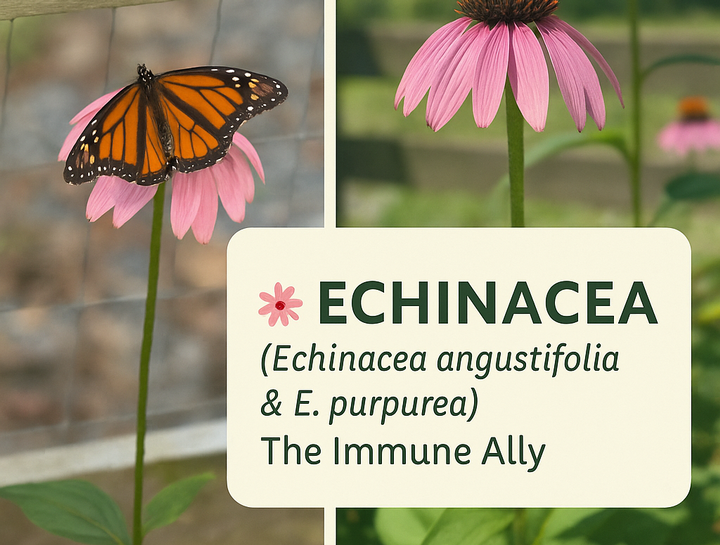
Echinacea (Echinacea angustifolia & Echinacea purpurea)
Also known as: Purple Coneflower
Family: Asteraceae
Parts used: E. angustifolia – root; E. purpurea – aerial parts or mature root
Where it grows: Native to the prairies and open woodlands of North America; now cultivated widely in sunny, well-drained soils across temperate regions.
Fun Fact: When chewed fresh, Echinacea root causes a distinctive tingling and numbing sensation on the tongue—an effect of its alkamides stimulating saliva flow and mucosal immune receptors.
Traditional and Modern Uses:
Echinacea has a long history of use by Indigenous North American tribes for wound care, sore throats, and infections. Modern herbalists recognize it as one of the most versatile immune-supportive plants, valued for helping the body mount an effective response during acute bacterial or viral infections. In veterinary medicine, it’s often used to support patients fighting respiratory, oral, or skin infections and to assist recovery after illness or stress.
How It Works:
Echinacea’s broad-spectrum effects stem from its unique blend of alkamides, caffeic-acid derivatives (such as echinacoside and cynarin), polysaccharides, and flavonoids. These compounds help modulate immune activity—enhancing macrophage and neutrophil responsiveness while calming excessive inflammation. The root (especially E. angustifolia) is rich in alkamides that produce the characteristic tingling sensation and contribute to immune stimulation and local analgesia. The aerial parts (from E. purpurea) contain polysaccharides that support mucous-membrane health and provide anti-inflammatory effects.
Safety & Precautions:
Echinacea is generally very safe and well-tolerated. Avoid use in patients with Asteraceae family allergies or autoimmune disorders. Rare hypersensitivity reactions have been reported. It may interact with immunosuppressant medications or drugs metabolized by CYP3A4 enzymes.
*Always consult your veterinarian before introducing any herb or supplement.
Research Spotlight:
A 2018 randomized controlled study published in the American Journal of Traditional Chinese Veterinary Medicine investigated the effects of Echinacea purpurea on canine immune response to vaccination. Dogs receiving Echinacea root powder (0.8 g/kg daily) showed significantly higher antibody titers to both canine parvovirus (CPV) and canine distemper virus (CDV) after vaccination compared to control groups. These findings suggest that Echinacea may enhance immune responsiveness and support vaccine efficacy in dogs when used judiciously alongside conventional care.
(Source: AJTCVM, 2018 — “A randomized and controlled study of the effect of Echinacea purpurea on canine parvovirus and distemper virus antibody levels in dogs.”)
This information is for educational purposes only and is not a substitute for individualized veterinary care. Always consult your veterinarian before giving herbs or supplements to your pet.
© 2025 Zach Lane, DVM — Content used with permission