
Monthly Herbal Monograph - Milk Thistle
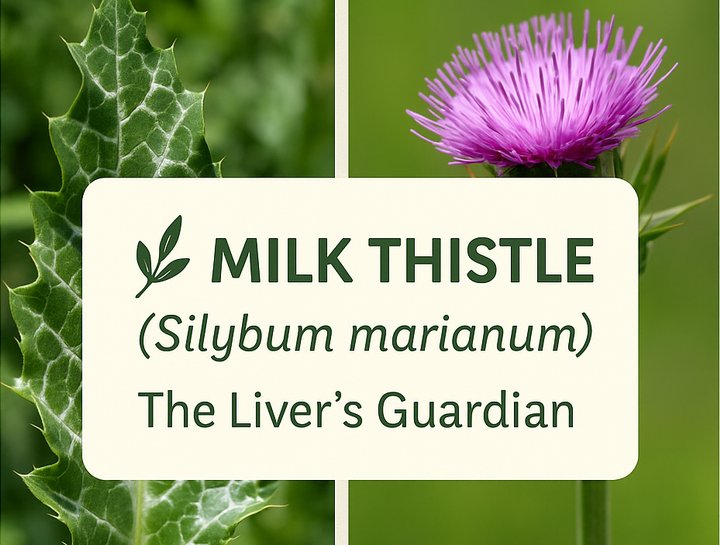
Milk Thistle (Silybum marianum)
Also known as: Holy Thistle, St. Mary’s Thistle
Family: Asteraceae
Parts used: Seeds
Where it grows: Native to the Mediterranean region, now widely cultivated in warm, sunny climates across Europe and North America. It thrives in dry, well-drained soils and produces distinctive purple flowers with white-marbled leaves — the source of its name.
Fun Fact: Legend has it that the white veins on Milk Thistle leaves appeared when a drop of the Virgin Mary’s milk fell onto the plant — giving rise to both its name and its long association with nourishment and protection.
Traditional and Modern Uses:
Milk Thistle has been revered for over two thousand years as a liver-restoring herb. Traditional healers prescribed it for jaundice and “congested liver,” while modern veterinary herbalists recognize it as one of the most important hepatic protectants available. In animals, it is used to support recovery from toxin exposure (including aflatoxicosis), drug-induced liver injury, hepatitis, and hepatic lipidosis. It also assists gallbladder function, lipid metabolism, and lactation support in some species.
How It Works:
Milk Thistle’s hepatoprotective activity centers on silymarin, a complex of flavonolignans (including silibinin, silydianin, and silychristin). These compounds stabilize hepatocyte membranes, inhibit lipid peroxidation, and promote regeneration of damaged liver cells by stimulating ribosomal RNA synthesis. Silymarin also enhances glutathione levels, improving the liver’s capacity to neutralize reactive oxygen species and detoxify harmful substances.
Safety & Precautions:
Milk Thistle is exceptionally safe and well tolerated in most species. Mild gastrointestinal upset or allergic reactions (especially in those sensitive to the daisy family) are rare. Very occasionally, mild ALT elevations have been reported in dogs but typically resolve upon discontinuation. It may lower insulin requirements in diabetic patients and could influence drug absorption via P-glycoprotein pathways.
*Always consult your veterinarian before introducing any herb or supplement.
Research Spotlight:
A 2020 study published in BMC Veterinary Research evaluated the hepatoprotective effects of silymarin supplementation in dogs receiving phenobarbital. Dogs treated with silymarin showed significantly improved liver enzyme profiles and antioxidant capacity compared to controls. The authors concluded that Milk Thistle offers measurable protection against hepatocellular oxidative stress in canine patients under long-term drug therapy.
(Source: BMC Vet Res, 2020 — “Protective effects of silymarin on liver function and oxidative status in dogs receiving phenobarbital.”)
This information is for educational purposes only and is not a substitute for individualized veterinary care. Always consult your veterinarian before giving herbs or supplements to your pet.
© 2025 Zach Lane, DVM — Content used with permission